
Simple locates, $200–$400
Short runs, decent access, leak confirmed and marked without drama.
The water bill knows something you don’t. Somewhere under a slab or behind a wall in Rouse Hill, a pipe is quietly feeding the ground, and finding it with instruments instead of a jackhammer is the difference between lifting three tiles and gutting a bathroom. We locate to centimetres, then repair through one deliberate hole.
Every concealed leak makes three things: a sound, a temperature difference, and a pressure drop. The gear reads all three. Acoustic equipment listens for the specific frequency of water escaping under pressure and gets louder as we track along the line; thermal imaging paints the wet path through a wall or the warm plume of a leaking hot line under a slab; and isolating sections of pipework against a pressure gauge proves exactly which run is losing water and which is sound.
Cross-referenced, they put an X on the floor within centimetres. That precision is the entire point, the difference between lifting three tiles and re-tiling a bathroom. It matters double under Rouse Hill’s older homes, where pipes wander in ways no plan ever recorded, and the "obvious" place to dig is reliably wrong.
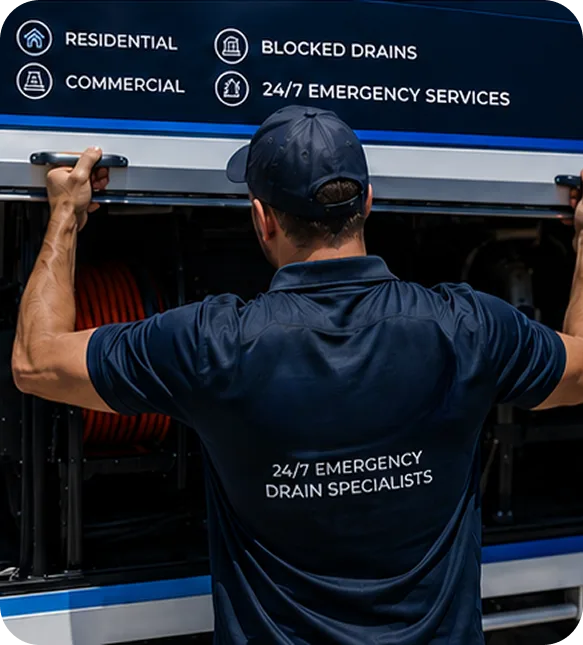

Brand-new Rouse Hill estates often have sand, silt and building debris left in fresh drain lines, choking them within the first year of living there.
In free-draining ground the useful methods are the ones that do not depend on seeing water: isolating sections and watching the meter, listening for the sound a pressurised leak makes through the soil, and tracer gas where acoustics are inconclusive.
It is slower than following a wet patch and far cheaper than excavating on a guess.
Rouse Hill’s townhouses and apartments share drainage runs, so a single blockage needs a camera and the right access to clear it properly.
The technical question and the financial question have different answers, and both need settling. Pipework serving only your lot is yours; risers, mains and common-property lines belong to the owners corporation.
A leak detection report that names the line, the lot and the direction of travel is what turns a dispute into a decision. That is what we write, because a description of where the water appeared settles nothing.
Mains pressure rises as elevation falls, and properties low on a slope routinely sit at the top of the acceptable range. Sustained high pressure is a genuine cause of leaks rather than merely a contributor.
Freshly developed estates put a lot of hard surface over the ground, so heavy Hills rain overloads new stormwater pits and backs up fast.
If your property is low-lying relative to the surrounding streets and you have had more than one fitting fail, a pressure test costs very little and a limiting valve costs little more. It is the cheapest leak prevention available.
Sand drains freely, which means a leak that would create an obvious wet patch in clay produces nothing visible at all. The water simply goes down and away, and the first sign is the bill.
It is the main reason we rely on the meter test and acoustic work here rather than looking for surface evidence. Absence of a wet patch proves very little in this ground.
The apartment showing the damage is almost never the apartment with the fault. Water tracks along the top of a slab, through penetrations and down whichever path is available, which can be several metres laterally before it enters your ceiling.
Rouse Hill sits at the growing edge of Sydney’s Hills District (postcode 2155), one of the region’s biggest growth centres. Around Rouse Hill Town Centre and the Metro, large master-planned estates and townhouse complexes keep spreading, while historic Rouse Hill House & Farm anchors the older side of the suburb. Bordering Kellyville, Box Hill and The Ponds, its mix of brand-new subdivisions and higher-density living keeps our drain crews busy, and we know the local ground well.
Thermal imaging and moisture mapping from below will usually establish the direction it is arriving from, which narrows the source before anyone needs access to a neighbour's bathroom.
A cistern that leaks internally into the pan can waste a genuinely startling volume, thousands of litres a quarter, with no sound and no visible water at all.
The test is a few drops of food colouring in the cistern. Wait twenty minutes without flushing, then look in the pan. Colour in the bowl means the outlet valve is passing, and it is usually a cheap part.
A concealed leak is most often discovered by a water bill rather than by water. By then it has usually been running a full quarter, which is both the bad news and a useful clue about size.
Compare the last three bills rather than two. A single high quarter can be a garden or a visitor; a steady climb with no change in the household is a leak until something proves otherwise.
Short runs, decent access, leak confirmed and marked without drama.
First hour with the full instrument kit, acoustic, thermal, pressure, on a typical concealed leak.
Beyond the first hour: extended runs, tight access, multiple suspects to eliminate.
Deep slab lines and multi-storey mysteries at the top of Sydney's range.
Priced off exactly what the detection proved, fixed before it starts, same crew, same visit, no second call-out.
The comparison to hold onto: exploratory demolition costs more than detection before its first guess is even wrong. Figures here are indicative of the 2026 Sydney market rather than a quote from us, you get your own number as a fixed price before any work starts.

The meter test done properly, plus your bills. If the evidence says there is no supply leak to find, you hear exactly that, free of a detection invoice.
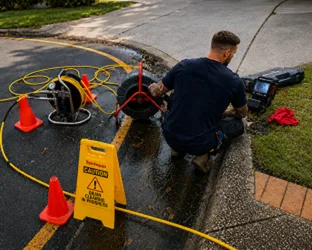
Isolating pipework section by section against a pressure gauge, hot versus cold, line by line, convicts one run and acquits the rest.

Acoustic tracking and thermal imaging walk the guilty run until the signals stack. The X on the floor is accurate to centimetres.
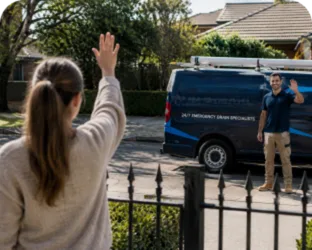
Access opens exactly at the mark; the failed section is repaired and pressure-tested. If the run's condition argues for a reroute instead, both numbers land first.
That is a leak, and it is not fixing itself. Book the detection before it surfaces through something expensive.
Non-invasive detection, evidence before quotes, and one crew for the find and the fix.

Leave your details and our local Rouse Hill team will call you back fast.