
The usual fixes, $150–$600
Elements, thermostats, thermocouples, relief valves: the parts that actually fail, tested and swapped in one visit.
Cold water at 6am feels terminal, but the autopsy usually finds a $40 part, not a dead system. We test before we talk replacements, carry the common failures on the van, and put Rouse Hill households back under hot showers the same day, saving the new-system quote for tanks that have honestly earned one.
Most of the no-hot-water calls we take in Rouse Hill end in a repair, not a skip bin. Electric systems lose elements and thermostats; gas systems lose thermocouples and pilot assemblies; continuous-flow units throw error codes that mean a sensor or a flow problem, not a dead unit. Those are parts, they are stocked on the van, and the fix is measured in hours.
The industry default is the opposite, quote a shiny new system to anyone whose water went cold, because a replacement is worth ten times a thermostat. We diagnose first. A five-year-old tank with a failed element deserves an element. What it does not deserve is a $2,000 replacement because someone could not be bothered testing a $40 part.
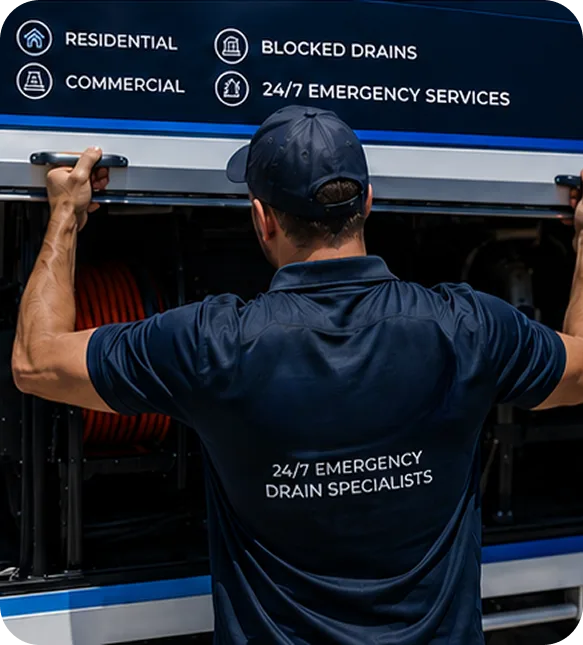

Heat pump units are increasingly standard in new builds and they behave differently from a tank. They recover slowly, they are noisier than people expect, and they lose efficiency on cold mornings.
Capacity complaints are usually a sizing problem rather than a fault: two showers at once, or a bath while the dishwasher runs, exceeding what the unit was specified to deliver. Worth diagnosing before replacing anything.
None of that is a fault. But it does mean a heat pump that seems to be underperforming in July is often working exactly as designed, and the answer is a timer adjustment rather than a call-out.
A storage tank holds a lot of water, and in a block it has neighbours underneath. A slow leak that would be a nuisance in a house is a damage claim in an apartment.
Rouse Hill runs a mixed stock, 54.4% separate houses and 25.4% flats by the ABS 2021 Census, so there is no standard hot water job here: a freestanding home and a unit in a block need different systems in different positions.
If yours sits in an internal cupboard, check that the safe tray beneath it drains somewhere and is not blocked with dust and lint. That tray is the only thing between a failed tank and the ceiling below, and it is almost never inspected.
On a recent build, check the manufacturer's warranty before anyone touches the unit. Most storage tanks carry five to ten years on the cylinder and less on parts, and unauthorised work can void it.
Rouse Hill sits at the growing edge of Sydney’s Hills District (postcode 2155), one of the region’s biggest growth centres. Around Rouse Hill Town Centre and the Metro, large master-planned estates and townhouse complexes keep spreading, while historic Rouse Hill House & Farm anchors the older side of the suburb. Bordering Kellyville, Box Hill and The Ponds, its mix of brand-new subdivisions and higher-density living keeps our drain crews busy, and we know the local ground well.
We will tell you when a unit is still in warranty even though that means the manufacturer's agent does the work rather than us. It is the cheaper answer for you and it is the honest one.
A temperature and pressure relief valve is meant to release a small amount of water during a heating cycle. A continuous drip is not normal.
It usually means the valve is worn or the incoming pressure is too high, and both are inexpensive to correct. Left alone, a weeping valve wastes a surprising volume of heated water and eventually seizes, at which point it is no longer a safety device.
Inside every storage cylinder is a sacrificial anode that corrodes so the steel does not. When it is consumed, the tank starts consuming itself, and that is the point of no return.
Replacing an anode costs a fraction of replacing a tank and roughly doubles its service life. Almost nobody does it, because almost nobody is told it exists, which is why it is here rather than in the fine print.
Two different faults look identical from the shower. Either the system has stopped heating, or it is heating and the hot is not reaching you.
Check another tap, ideally at the opposite end of the house. Hot everywhere else means a tap or mixer fault, not a heater fault. Nothing hot anywhere points at the unit, its power or gas supply, or the pipe leaving it: and that is worth knowing before anyone quotes on a replacement.
Hot water systems give more notice than they get credit for. Rusty or discoloured hot water, a recovery time that has quietly doubled, a relief valve that has started weeping continuously, banging or rumbling from the tank, or damp around the base.
Any one of those is worth a look. Together they are a unit telling you to choose the replacement date yourself rather than have it chosen on a winter morning.
Elements, thermostats, thermocouples, relief valves: the parts that actually fail, tested and swapped in one visit.
Gas valves and continuous-flow control boards, on systems young enough to deserve the investment.
Installed, like for like. Gas storage lands at $1,200–$2,200 installed.
Installed. Endless hot water, nothing to rust through, and the cupboard back.
Installed, after rebates: and the cheapest of everything to actually run. Worth the comparison on every replacement.
You see the repair number and the replacement number together, the decision is yours, made with both in hand. Figures here are indicative of the 2026 Sydney market rather than a quote from us, you get your own number as a fixed price before any work starts.

System type, rough age, what it is (not) doing: enough to load the likely part before the van leaves, which is what makes same-day real.
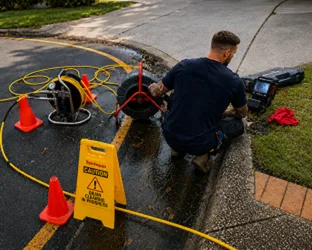
Elements metered, gas sequences traced, codes decoded. Diagnosis is a measurement, not a sales opportunity.
A live part gets fitted then and there. A dying tank gets you both prices, the reasoning, and zero pressure.
Repairs run same-visit; standard replacements called in early usually shower hot the same evening, installed to spec, old unit gone.
Early calls usually shower hot the same night. Tell us the system on the phone and the likely part rides out on the van.
Diagnosis first, honest numbers second, hot water third: usually all on the same day.

Leave your details and our local Rouse Hill team will call you back fast.