
Getting us there: $80–$180
The standard Sydney attendance fee. Ours is stated on the call, before you decide anything.
A burst pipe at 2am does not wait for business hours, and neither do we. One call reaches a licensed plumber, not an answering service, and a crew is dispatched to Rouse Hill with the gear to actually stop the problem, not just look at it.
Here is the test we give callers: is it spreading? Water spreading through a ceiling, waste rising in a floor drain, gas reaching more of the house: spreading problems are emergencies, because every hour of waiting is added to the repair bill. Static problems, a drip into a bucket, a slow drain with a second bathroom available, can usually sleep until daylight rates. Tell us what you see and we will sort it into the right column honestly.
The other half of the job happens before we arrive. Whoever answers your call talks you through the shut-off that stops the damage, the meter valve for water, the cylinder valve for a failing tank, evacuation and 131 909 for gas, so by the time the van reaches Rouse Hill, Kellyville, Box Hill, The Ponds or anywhere across the Hills District, the situation is stable and the repair can start instead of the triage.


On a newer home this question is worth asking before anyone starts work, because the answer can be worth thousands. Defects in workmanship are typically covered for a period after completion; blockages from ordinary use are not.
Freshly developed estates put a lot of hard surface over the ground, so heavy Hills rain overloads new stormwater pits and backs up fast.
What settles it is evidence. We record what the camera shows and describe the fault in terms a builder or insurer can act on, a displaced joint, a fall out of tolerance, debris from construction. You may still choose to have us fix it tonight; the documentation is what lets you recover the cost afterwards.
The slowest part of an apartment emergency is often not the plumbing, it is the door. Fob access, a basement that needs a resident to open it, a car park with no after-hours entry: any of those can add half an hour while water is still running.
Rouse Hill’s townhouses and apartments share drainage runs, so a single blockage needs a camera and the right access to clear it properly.
Two things worth doing before you ever need them: find your lot's isolation valve, usually in the laundry or a hallway cupboard, and save the building manager's after-hours number in your phone. Both take five minutes on a calm evening and both save real time on a bad one.
Brand-new Rouse Hill estates often have sand, silt and building debris left in fresh drain lines, choking them within the first year of living there.
On sloping ground the problem is rarely where the symptom is. Water leaves a failure at the highest point and surfaces at the lowest, which can be several properties away and well downhill of anything you would think to look at.
It is also why a neighbour's overflowing gully is sometimes your blocked line, and occasionally the reverse. We work uphill from the symptom rather than digging where the water appears.
Rouse Hill sits at the growing edge of Sydney’s Hills District (postcode 2155), one of the region’s biggest growth centres. Around Rouse Hill Town Centre and the Metro, large master-planned estates and townhouse complexes keep spreading, while historic Rouse Hill House & Farm anchors the older side of the suburb. Bordering Kellyville, Box Hill and The Ponds, its mix of brand-new subdivisions and higher-density living keeps our drain crews busy, and we know the local ground well.
It surprises people that a five-year-old house can have drainage trouble at all. But new lines fail for reasons old ones do not: bedding that was rushed, a fall that is slightly wrong, a section knocked out of line by machinery before the slab went down.
The upside is that new pipe is almost always repairable rather than replaceable, and the fault is usually one identifiable section rather than a tired system. The camera finds it quickly because there is nothing else wrong to distract from it.
A yard that floods in every serious downpour is a different problem from one that flooded once in a freak storm. The first is a blocked or undersized line and it will keep happening; the second is weather.
Telling them apart takes a camera on a dry day, not a guess in the rain. If it has happened twice, book the inspection between storms, clearing a surcharging pit at the height of it costs more and tells you less.
The standard Sydney attendance fee. Ours is stated on the call, before you decide anything.
Business hours runs $120–$160; nights, weekends and holidays sit above it. That is the honest cost of a plumber on the road at 3am.
What most real after-hours jobs come to once attendance, the first hour or two and small parts are tallied.
Slab access, gas line work, walls opened overnight. Quoted to you in full before a tool comes off the van.
If your description says it can safely keep until morning, we say exactly that and book you at weekday rates instead. Ask.
No number is invented after the fact, you approve the price before work starts, 2pm or 2am. Figures here are indicative of the 2026 Sydney market rather than a quote from us, you get your own number as a fixed price before any work starts.
You describe it; we tell you what to isolate right now, and give you a real ETA, plus an honest "this can wait" when it genuinely can.
Crews run stocked for the common failures, pipe and fittings, valves, flexi hoses, drain machines: so the fix does not wait for a supplier to open.
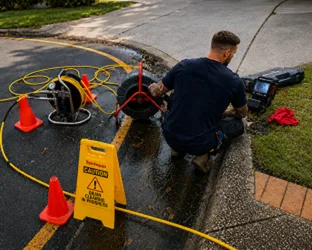
Damage gets stopped before anything else. Then you see a fixed price for the repair and decide with the number in front of you.

Nearly every emergency gets its permanent fix on the spot. Where a part truly has to wait, you are left watertight and working until it lands.
Describe it and let us make the call with you. Genuine can-wait jobs get booked at daylight rates, genuine emergencies get a crew now.
Call for the fastest response, any hour. Or send the form, after-hours enquiries get a callback from the on-call plumber, not an inbox.

Leave your details and our local Rouse Hill team will call you back fast.